Turning Around theEV App Experience
Aboutthe project
Context
I owned the UX of the EVBox Everon app for almost four years. It started as a charging-on-the-go tool for lease drivers, sitting at 3.2 stars. We turned it into something different: a companion app for EV station owners at home.
I shipped features, fixed systemic UX gaps, and grew into leading the design direction across the product.
My Design Footprint
- Owned UX/UI for mobile across iOS and Android
- Shaped the design system and interaction patterns
- Ran usability testing and user research
- Grew into design leadership — set direction, mentored, aligned stakeholders
Signals ofSuccess
Outcome
- 3.2 → 4.4 App Store rating upliftUsers went from angry reviews to recommending the app
- Smartest charger awardFrankfurter Allgemeine Zeitung ranked EVBox Livo together with the apps as the smartest charging station on the market
- Fewer support cases over timeSystematic UX fixes reduced confusion — users stopped calling because the app started making sense
DesignProcess
I inherited the app at 3.2 stars. Before touching anything, I ran a full UX assessment — mapped every flow, catalogued every friction point. Then I sat down with Product and prioritised ruthlessly. One gap stood out above everything else: missing and inconsistent loading states.
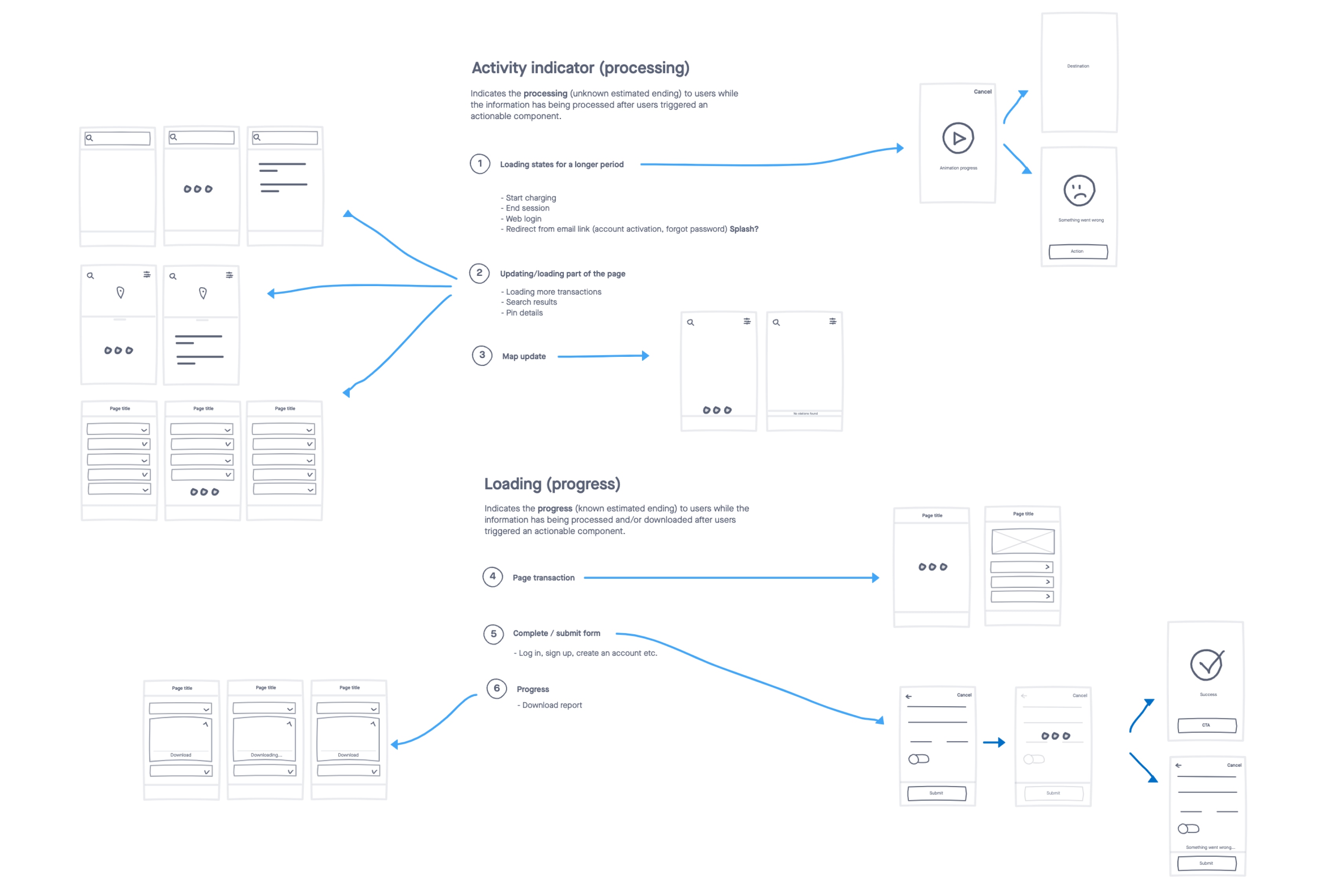
Loading states
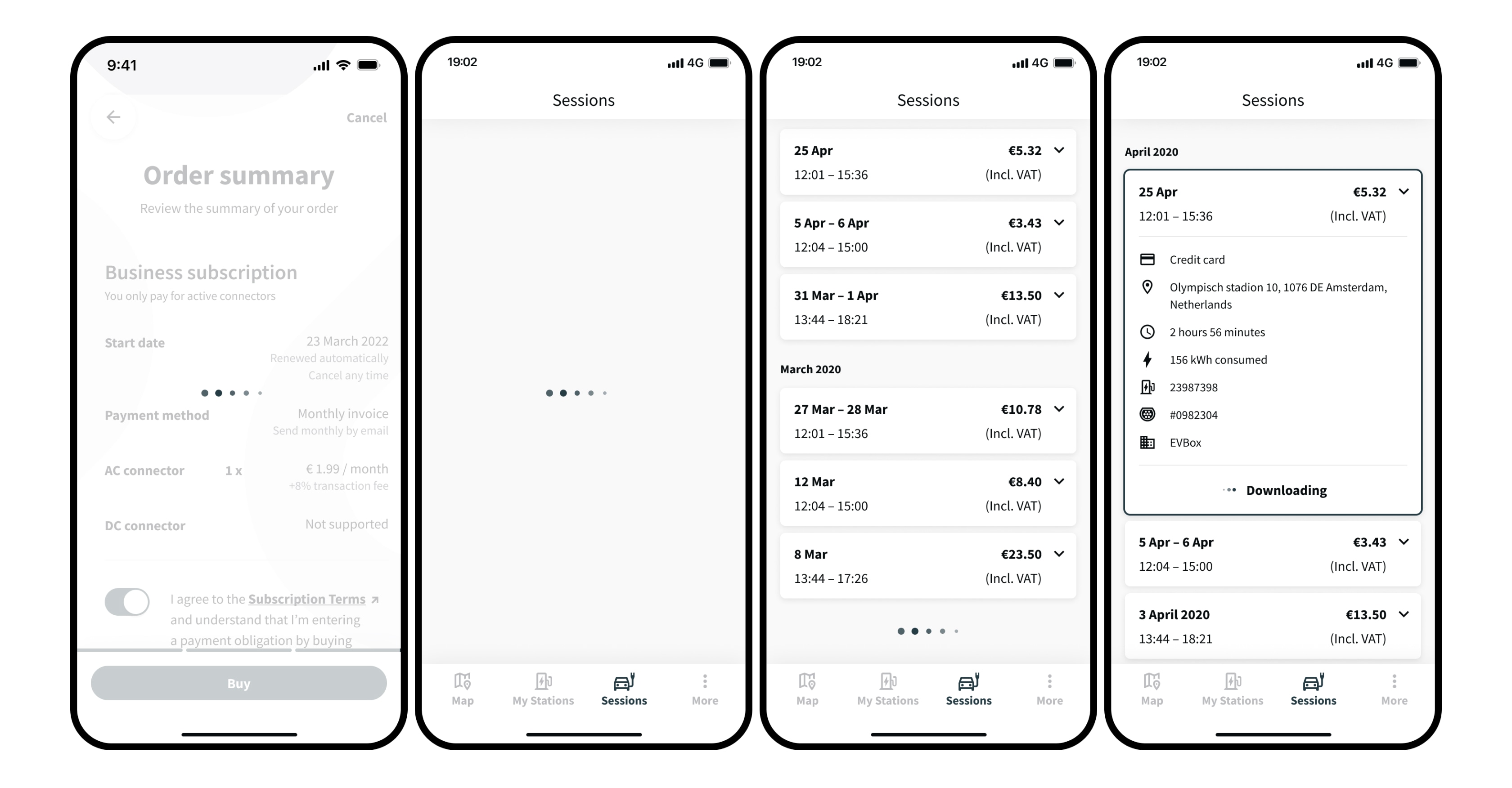
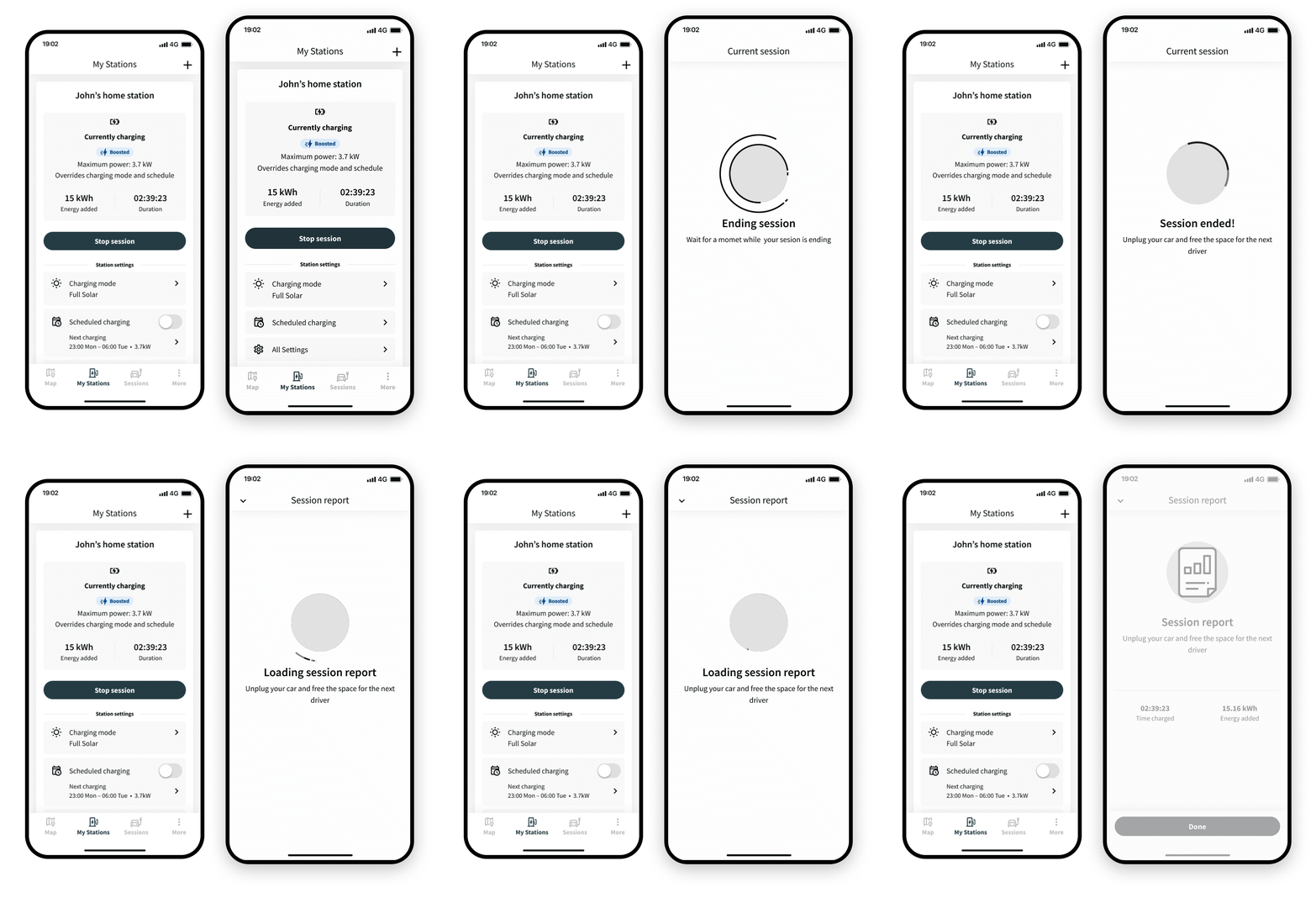
I collected and categorised every async interaction in the app — every tap that triggered a wait, every screen that went blank. Then I designed a system of states that told users what was happening and why.
Contextual animations
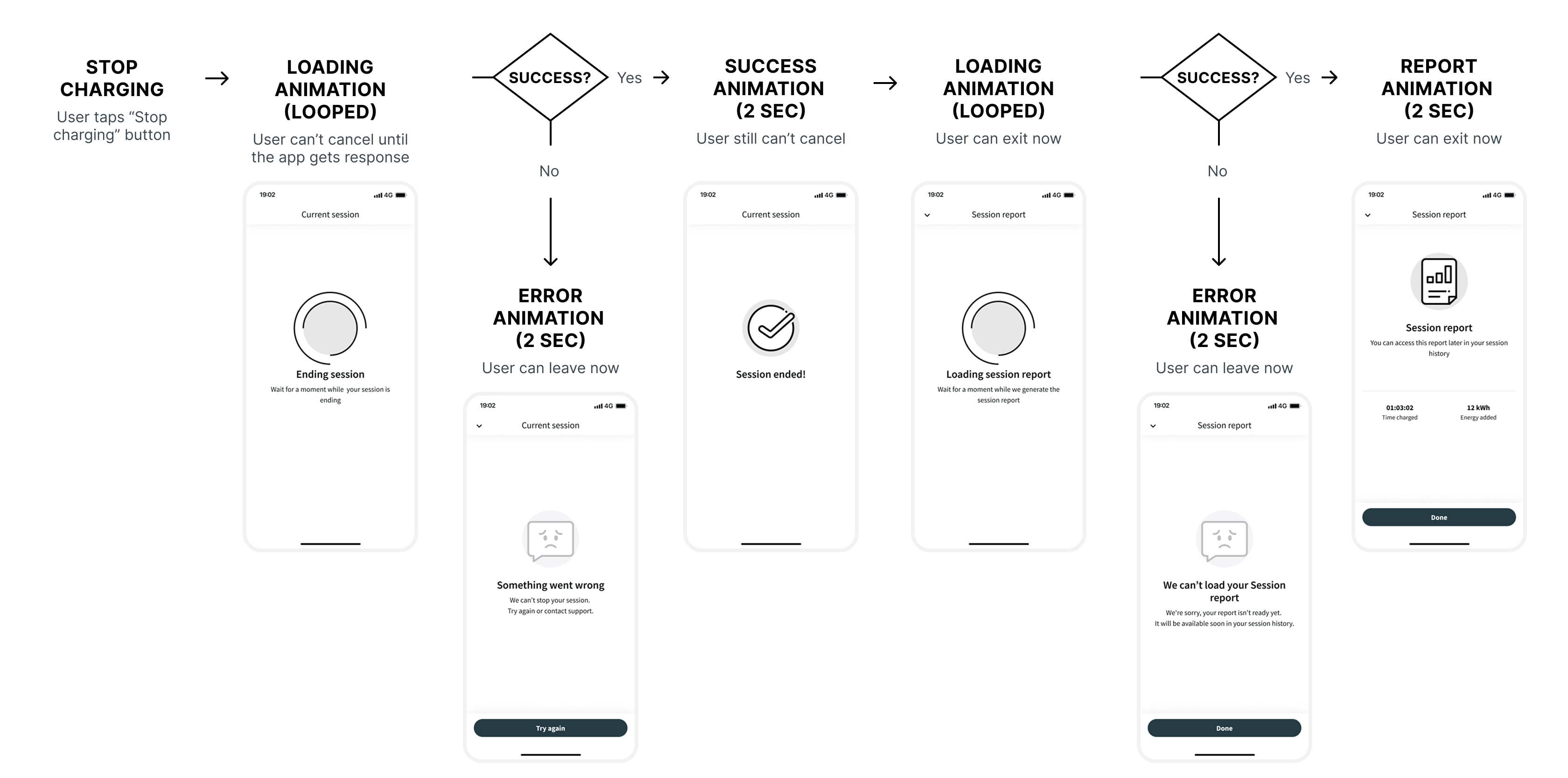
Some flows took over 30 seconds to process. You can't fix the backend latency. But you can design how waiting feels.
I replaced static spinners with contextual animations that showed progress and explained what was happening. Ending a charging session, for example, became three clear stages:
- Request sent
- Confirmation
- Loading session report
Users got a sense of progress — and could exit early without losing data.
Charging with Solar Energy
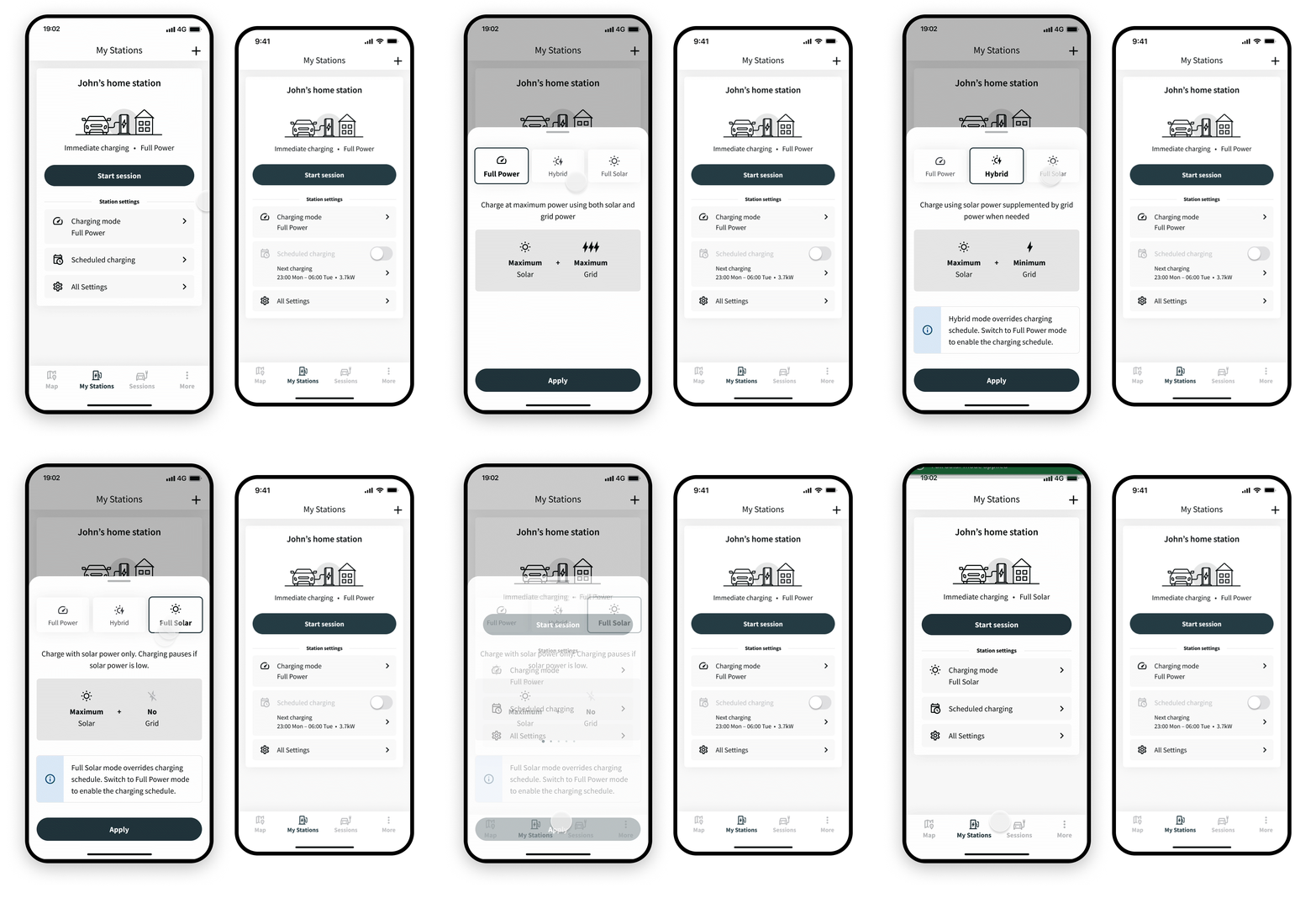
The new gen of EVBox chargers had solar capabilities. The firmware exposed a number of technical parameters. Station owners — not engineers — had to configure them.
I worked with hardware architects and ran user interviews to find what actually mattered. Then I proposed collapsing the complexity into three predefined charging modes. One simple choice instead of complex settings:
- Full Power prioritizes maximum available charging speed regardless of weather conditions
- Hybrid combines solar and grid energy, minimizing grid usage and reducing charging costs
- Full Solar uses only solar energy for charging; the charging speed is slow and depends on weather conditions